
Federal Wildland Firefighters need to speak freely with the media to explain why the system is broken, and how it needs to be fixed.
Speaking to the Media
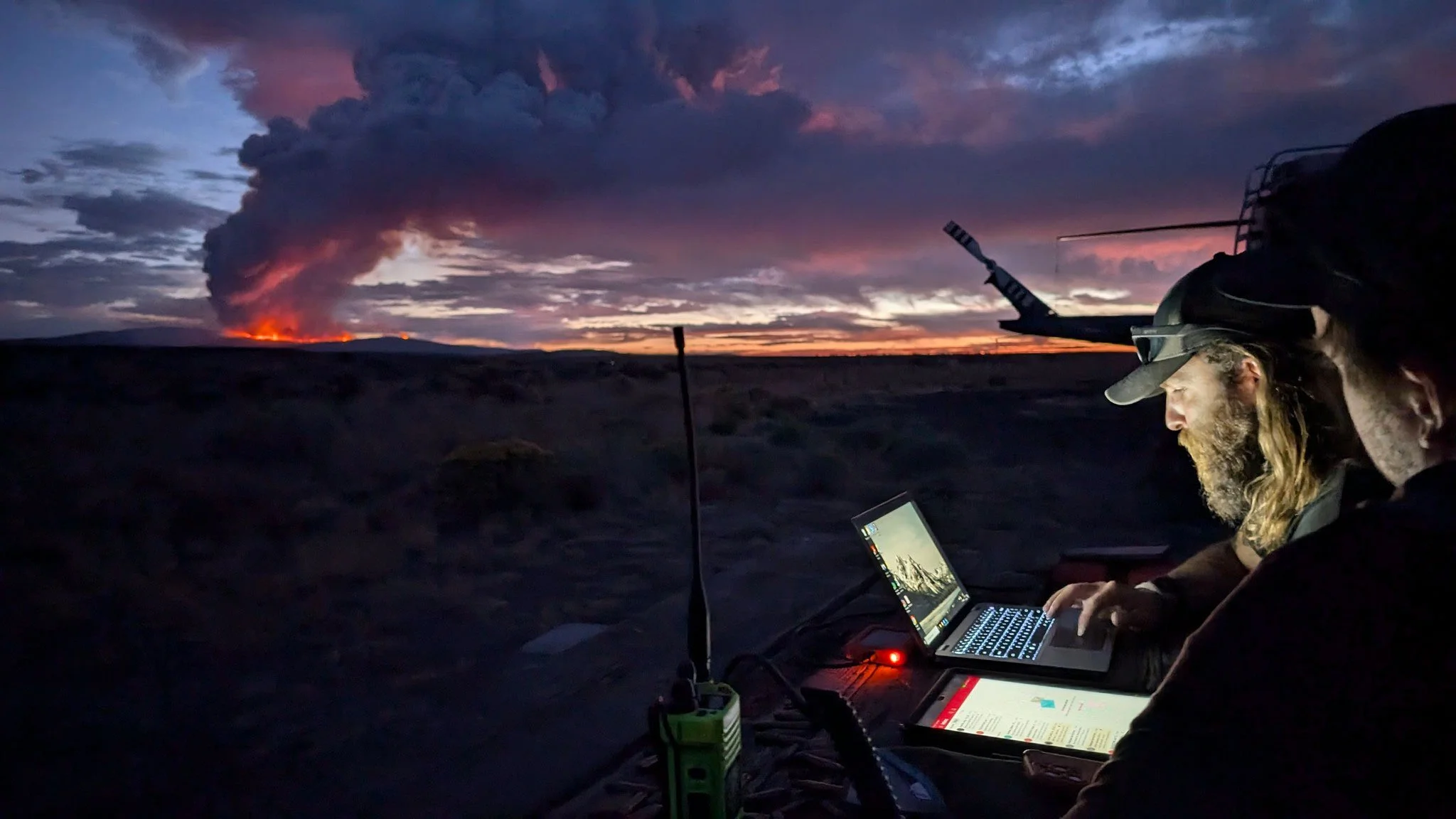
It’s critical for wildland firefighters to speak with the media.
That’s how change starts to happen. All the current reforms started because we spoke with the media and made them aware of the current, unsustainable conditions that wildland firefighters face.
Best Practices
From A Pro
MEDIA, PRESS, INTERVIEWS & NEWS
POLICY
In their official capacity as employees representing the Forest Service during interviews with media representatives, employees should:
Confine remarks to matters and activities about the unit, program, and activities they represent that are within their area of expertise. Employees should not comment about Forest Service or other matters that are beyond their knowledge, experience, or purview. Employees conducting interviews in their official capacity should express official agency positions and refrain from conveying personal opinions.
Work with the appropriate-level Public Affairs Specialist before the interview to determine the best way to respond to the media inquiry.
Refrain from discussing matters in litigation or on other program or policy matters that may be speculative.
POLICY
In an unofficial capacity (off hours) during interviews with media representatives, Forest Service employees should:
Not speak on behalf of the agency or represent the agency by wearing a uniform, crew t-shirt, or note where they work (Agency, region, forest, district, station or crew). Noting your position is acceptable.
BEST PRACTICE (not policy, but smart to follow)
In an unofficial capacity (off hours) during interviews with media representatives, Forest Service employees should:
Notify their supervisor of any off-hour interviews so there are no surprises. Supervisor may choose to notify up their chain of command.
Not behave in a manner that could imply that they are unfit for duty – drug use, excessive alcohol consumption, etc.
Not use explicit language.
Not use derogatory language regarding race, gender, sexual orientation, or other protected classes.
SOCIAL MEDIA
(PERSONAL)
BEST PRACTICE (not policy, but smart to follow)
Do not associate yourself with your job and agency you work for
If you do post who you work for:
DO make your handle/page private
DON’T post pictures of your work day that include anything that you could possible get fired for – lack of PPE, inappropriate use of government equipment, safety violations, general bad behavior.
DON’T post pictures of you in your off-hours consuming alcohol or illegal substances while wearing your uniform, crew t-shirt, hard hat, etc.
DON’T post politically charged messages.
DO expect that the world can see your posts and that someone MIGHT bring your post to the attention of FS Office of Civil Rights if it offends them.
Bottom line: You have no right to privacy when you show the world that you are a federal employee. You work for the public and they will complain if you are not acting in a way that they feel is appropriate. If you identify yourself as a federal employee do not post anything that you do not want your grandmother to see.
From A Lawyer
The Brechner Center for Freedom of Information has released a document that all federal employees should read.
PRACTICAL STRATEGIES FOR CONFRONTING GAG POLICIES
When a news organization is told that government employees are forbidden from speaking to the media, that should prompt a series of questions. First, a reporter should ask the “policy” exists in any formal, written format – and ask exactly what it says. Often, the “policy” turns out to be nothing more than “you’ll-get-in-trouble” gossip handed down through watercooler chatter. Second, it should be asked who made the policy and whether the policy carries any binding force. If the policy is just a memo issued by a public-relations officer, then it’s not a legally binding “regulation” carrying the authority of agency supervisors with hiring-and-firing authority. Third, a reporter should inquire whether employees are subject to disciplinary consequences for disobeying the policy. If not, then the “policy” is really just a request. And fourth, it should be asked whether a journalist who defies the policy and contacts agency employees directly without going through the specified public-relations channels be subject to any sanction. Ideally, the agency’s responses to these questions should be documented – in writing, on camera, or in a (legally) recorded conversation.
The more overtly that an agency purports to require journalists or employees to obtain clearance of their interviews under threat of concrete consequences, the more clearly the policy will be vulnerable to constitutional challenge.
If an agency acknowledges that the policy carries no punitive consequences, that acknowledgment should be documented and published to reassure employees that they are not subject to a prohibition on interviews. When employees claim to be bound by rules that forbid interviews, those claims should be investigated, and the findings publicized.
Some of this content is controversial, we only show this section because it is the official perspective, not because it is the best advice.
SOCIAL AND TRADITIONAL MEDIA RIGHTS AND RESPONSIBILITIES FOR FEDERAL EMPLOYEES
March 17, 2022
Kathryn O'Connor, director, Office of Communication
Hello everyone, I’m Katie O’Connor, the USDA Forest Service director of communication. I frequently receive all kinds of questions about social and traditional media and employees’ rights and responsibilities. The basic principle for both is, speak for yourself and not the agency unless you are authorized to speak on behalf of the agency.
This is Who We Are (internal link) defines the concept of our agency voice, which is all about how we are experienced by others when they interact with us, be that virtually or in person. We want interaction with the Forest Service to be a positive experience for everyone, and for that reason, there are parameters around how we engage in both social media and the news media. While the specialty area is different, operating in the public affairs environment is quite similar to other parts of the agency. Many of us have direct interaction with public in various roles. In our arena of public affairs, my experienced colleagues and I advise others and run our communication program, giving our agency a wider reach.
Forest Service employees care about issues that affect their families, communities and careers, just like everyone does. I’ve noticed that because you care so much, sometimes on social media and in traditional media lines are crossed that should not be. That being said, the most frequently crossed lines are unethical behavior and official roles.
I separated social and traditional media below for clarity about the specifics of each.
-
SOCIAL MEDIA
For those of us who use social media, we know it can be both a very useful tool and a space that can quickly become overwhelming and contentious. If you have ever taken a break from social media, you know what I am talking about. I hope this article on employee use of social media will provide clarification and serve as a reminder of your rights and responsibilities as you make decisions about your own social media presence, given your status as a federal civil servant.
Unfortunately, unethical behavior in social media is rampant. You absolutely have First Amendment rights. However, your personal social media activity must not violate ethics, Standards of Conduct or other applicable laws, regulations and policies.
We are always public servants, in and out of uniform. So, when you post a response that can be considered unethical or derogatory in a public forum in a manner that can be interpreted as representative of your role as a Forest Service employee, your personal social media comments are frequently reported to the agency. When they are reported, the Office of Civil Rights, Employee Relations and supervisors look at your conduct in terms of Equal Employment Opportunity-based harassment or discrimination.*
You can be on your own time and equipment and post a public comment on a page that has nothing to do with the agency, but someone reports it to the agency. Or your comments could be between employees and contribute to an unlawful, hostile work environment. Or you could be at work and posting on your personal equipment on your personal account, but in a way that offends someone. Remember, when you are at work, you are expected to do your job. Whatever the exact circumstance, there are consequences based on the severity of the incident.
Unethical behavior on social media is easy to avoid—just don’t do it. Remind yourself when making comments or posts to live by the “golden rule” and treat others like you want to be treated. Or you could model our agency values as outlined in This is Who We Are and think about how your comments and, therefore, actions, could be in conflict with the agency.
I understand if you think this advice puts you in a gray area where you cannot be yourself on social media, and that is understandable. As federal civil servants, we have a higher responsibility as outlined in the Standards of Conduct. One of the easiest ways to create space between your personal and professional lives is to choose not to affiliate yourself with the agency on social media. You can also place a statement in your “about you” profiles that your opinions represent your own and not those of your employer. Even if you take these steps, you are still expected to uphold the Standards of Conduct, and that is why I am sharing this information with you. I want you to have full awareness when you are making these choices.
Speaking of affiliating yourself with the agency, that brings me to the next part of your rights and responsibilities on social media—your role on social media. You can be proud to work for the agency and talk about the cool things you do at work. That’s great, and I do it too. I love to share our blogs and features with my family and friends on Facebook and in my professional network on LinkedIn. But you must make sure you don’t blur the lines between your personal and professional lives. What I mean, specifically, is you must speak for yourself and not the agency. Even if you are authorized to speak on behalf of the agency in a public affairs or coordinated subject matter expert instance, you would not be doing so on your personal social media platform.
Please continue to use social media for the positive connections it can create, but avoid hate and harassment and be clear that you are only speaking for yourself. The Forest Service is a fantastic agency with a mission we can all be proud of, and we do so much good for people, communities and the land. I know we all really care about the mission of the Forest Service and we want to show up in ways that best represent who we really are.
For more information, please read the Office of Government Ethics’ OGE Legal Advisory LA-15-03 on the standards of ethical conduct as applied to personal social media use, and Forest Service Manual 1660, Digital Services (internal link).
TRADITIONAL MEDIA
Traditional media is often referred to as the Fourth Estate due to its watchdog role for the three branches of the federal government. It’s a valuable tool to ensure we are ethically and effectively serving the public and taking care of their most important assets, which are their family members who may work for us, tax dollars, public lands, health, and even economic vitality. We all have rights – and responsibilities – in this nation with a free press, as well as guaranteed rights to free speech under the first amendment to the Constitution.
This is a great system, and most of the time it works quite well. There are considerations, however, when it comes to exercising our free speech rights. The thing about the media outlets is, they’re not just looking for stories of us doing great work. They’re most often looking for news, which is often controversial. The public expects us to do a good job, so that’s not news. A good acronym taught in journalism classes to help us remember what members of the media are looking for is SPICECOPS, which stands for suspense, proximity, immediacy, conflict, emotion, consequence, oddity, prominence, and sex. These subjects often affect people negatively, so we want to make sure we communicate the agency position accurately when we find ourselves engaging with media representatives.
So, what should you do if you are contacted by the media? If a media outlet asks you to provide information or an interview, it is important that before responding, your first step is talking to your unit’s public affairs specialist. They have a responsibility to help determine the best way to proceed when coordinating media requests. If you work in the Washington Office, coordinate with the national press officer in the Office of Communication. Everyone else, including line officers, should consult with the appropriate public affairs officer for the unit, region, station, area, or institute. You’ll find this policy in Forest Service Manual Chapter 1650, Media Relations (internal link).
Being interviewed or providing information as a subject matter expert is an important role that helps the agency provide the public with factual, accurate, and timely information about Forest Service policies, programs, and activities. If you are designated to represent the agency, your public affairs professionals will support you and ensure you are well prepared. General guidance includes confining remarks to matters and activities about the unit, program, and activities you represent within your area of expertise. Don’t discuss matters beyond your knowledge, experience, or purview. You should know and express official agency positions and avoid discussing litigation, budgets, or issues that may be speculative. As a representative of the agency, you should refrain from conveying personal opinions.
If you decide to engage with a media representative in a personal capacity, you should make clear to the reporter that you are doing so and not speaking on behalf of the Forest Service. Nor should you be discussing matters related to your professional capacity in such a conversation. It’s important that there is a clear line between personal experiences or opinions and those tied to your job with this agency.
In summary, in social and traditional media, always remember to speak for yourself and not the agency, unless you are authorized to do so.
*This means unwelcome and offensive comments based on race, color, religion, sex (including pregnancy, sexual orientation or gender identity), national origin, age (40 or older), disability and genetic information (including family medical history). In the context of social media communication, conduct may include, but is not limited to, offensive jokes, slurs, epithets or name-calling, ridicule, mockery, insults, intimidation or put-downs.